
Thy sea so great, and my boat so small
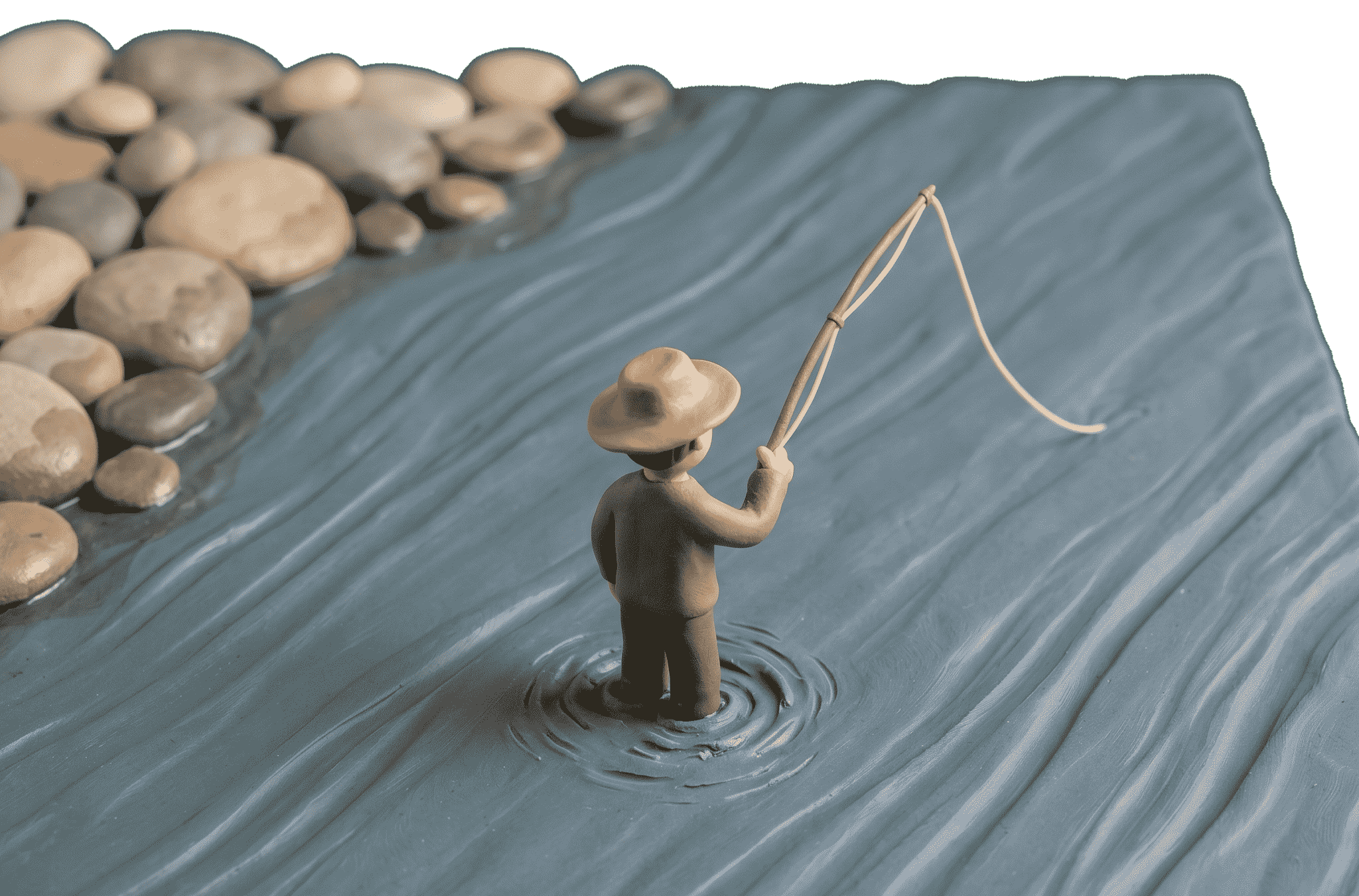
This photo is taken in western Massachusetts. It is a photo of the Deerfield River. Specifically, it is the section known as the Zoar Gap Section. It is near Florida, Massachusetts, which is a confusing name -- especially since there does not exist a Massachusetts, Florida (that I can find on any map). This sheet of water is just below the Fife Brook dam. As such, it is tailwater fishing. Tailwater fishing means that cold water fish, like trout, can live in an area which is otherwise too hot. The water released from the dam is (presumably) released from the colder bottom of the confined reservoir.
The typical flow of this river is 125cfs. That is not particularly fast. The rivers we (my wife and I) have found in Massachusetts are pretty sluggish overall. I suspect this is because most of the state is just above sea level, and the water is in no hurry to drain to the sea. The Fife Brook dam is on the Eastern Slope of the Berkshire mountains (apparently known only as "The Berkshires").
There are a few things remarkable about this river, and this photo.
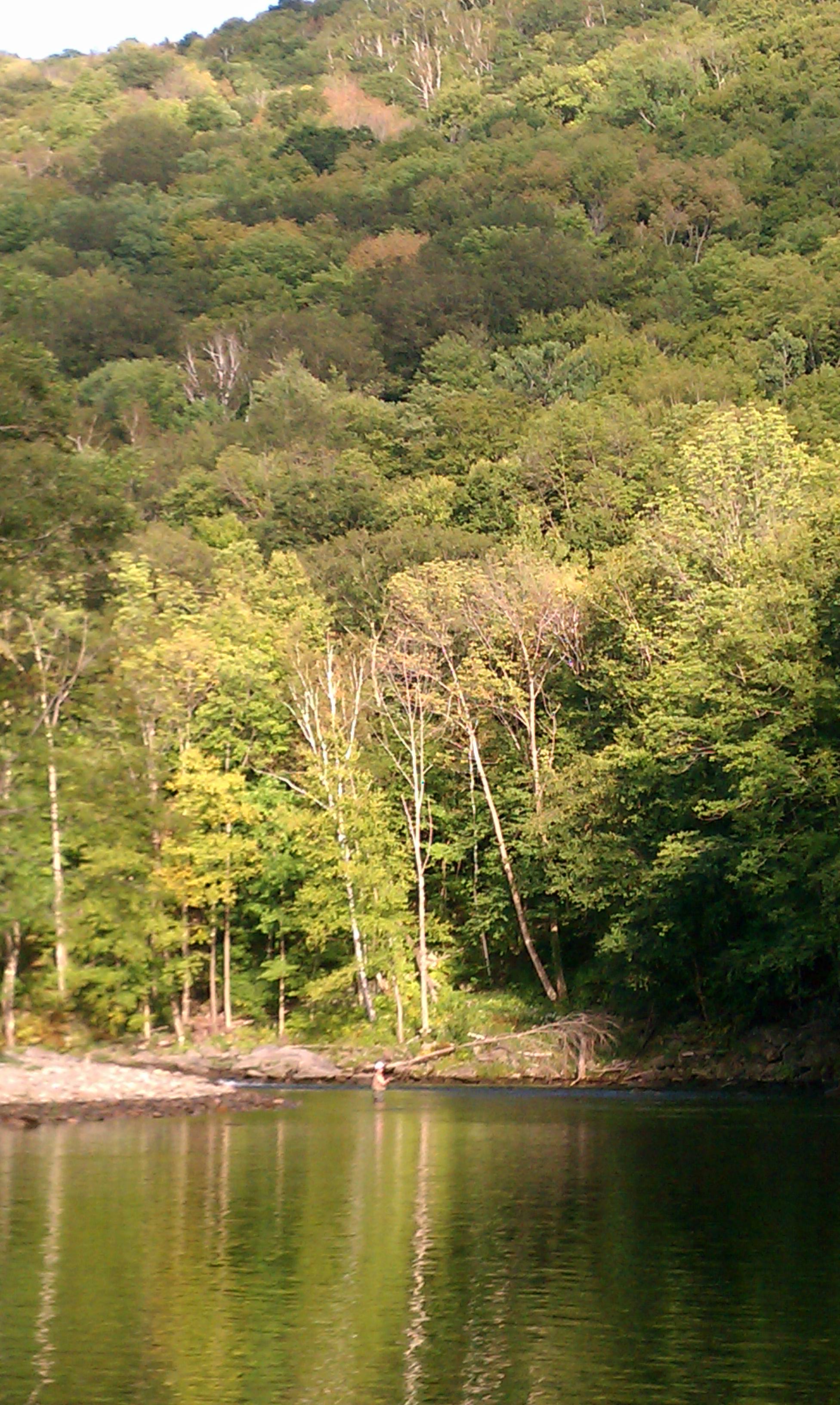
First, that's my wife fishing at the bend in the river. I took this photo because I was struck by how tiny we are. And yet, we imagine ourselves so central to everything on this planet (and, for some aspirants, the galaxy or universe).
I love fishing because I never need to worry about what I'm up to when I'm fishing. Most of my working day is spent impersonating an erstwhile adult. I'm rarely sure about what I'm doing, or about the outcome. When I'm fishing, I know exactly what I'm doing: I'm fishing. Fishing has few rules and a bit of etiquette. But mostly, it involves standing in a river waving a stick (John Gierach). I can manage that quite nicely, doubt-free. The other reason I love fishing is because I rarely get interrupted when I'm fishing. When I am interrupted, it is usually by a fish. And, as I say, that's rare. When I am working, I get interrupted frequently. I don't mind the actual interruption, but I mind the effort required getting back to whatever I was doing pre-interruption. So, that's it: no self-doubt, and no unwanted interruptions. From long talks about this subject, I know that my wife concurs.
Second, this photo is remarkable because the rocks along the shore are wet (far above river level). My wife and I read about the Deerfield river, drove out to it, and waded into the river. We found a nice beat which was empty of people. The river was moving at a good clip, and we began casting and enjoying the late afternoon. At about 5p, the water level started dropping. I was pretty sure it was my imagination. So I picked out a rock and kept an eye on things for about fifteen minutes. It was not my imagination: the water was dropping noticeably. I have been on tidal influence rivers in Alaska, where the tide can be 20 feet in places. But now I was on the side of what passed for a mountain, far from any tidal force.
Upon our return home, a quick bit of reading revealed that every day (sometimes twice a day) the keeper of the dam (the "damn-man" as my father might say) blows a horn, and cranks open the gate. The flow increases to above 750cfs for a few hours. Things that were dry become wet. Things that were wet become submerged. And people like me become astonished.
I came to the water during decline (both its and mine). I was wet-wading (no waders, just boots, 'cause it was hot). Initially, I was pulling out my prostate trying to cast to the far shore where the scum-line was. Professional guides will tell you that the fish are under the scum line -- unless the scum line is easily reachable, and then they will tell you that the fish are elsewhere. As the water receded, I walked out within easy casting distance of the far shore and the scum line. I was astonished. My immediate reaction was, "wow, how many times have I wished I could adjust the water level on some other river for better position?" It was a bit God-like to wish for an easier cast, and then watch the river comply.
My next reaction was "wow, I hope the guys that built that damn were paying attention during engineering class." Like so many human accomplishments, we flirt with the edge of folly. Consider an aluminum tube full of people at 30,000 feet, a nuclear reactor inside a steel drum with a bunch of sub-mariners aboard at the bottom of the ocean, or, in this case, a pile of concrete and steel impeding the flow of a significant quantity of water. As far as I know, the dam is still in place and serviceable today; my incredulity notwithstanding.
As I waded back out of the river (having lost all track of time), I looked at my wet khaki shorts. I considered how those few inches (perhaps 18) of water had made such a difference in my immediate world. Just those few inches of water made walking difficult, in places treacherous, and in places impossible. Fifty strong men could not have pushed those few inches of water off its course. And those few inches of water, running for four hours or so, did not accumulate into even a rounding error in the worldwide water cycle equation.
So I made a few mental notes as I changed my wet boots for some camp moccasins back at the truck. God did not design people to push rivers. If whatever I'm doing feels like I'm pushing a river, I should try something else. It's probably a good idea to ignore how small we are, and how big the world is around us. Whenever I try to get my mind around the scale of things, I jump straight over humble and land on insignificant, scared, or paralyzed. I require just enough perspective to stay in the humble zone. Finally, as a general observation, I should step out of the river when the horn blows.